



«España Crece», a new sovereign fund for Spain
The President of the Government, Pedro Sánchez, announced on January 15 the creation of «España Crece», a sovereign fund managed by the Official Credit Institute (ICO) and initially endowed with 10.5 billion euros. Through contributions from investors and private debt, the Government aims for this new investment vehicle to reach 120,000 million euros, with the purpose of investing and financing activities in various sectors of the Spanish economy.
This announcement must be framed in a context in which the last General State Budgets approved are those for the year 2023 and in which European funds come to an end in August of this year. The current complicated parliamentary arithmetic has made it impossible to approve budgets in this legislature. The scenario of a legislature without budgets being the most likely, the extension of the 2023 budgets limits the Government's room for maneuver to make new investments that the Spanish economy needs in 2026. European funds have helped to compensate, in part, for the lack of budgets, by granting the government funds external to the budget. The end of European aid complicates the prospects of an economy whose good performance in recent years has been based, to a large extent, on spending and immigration. In this context, “España Crece” would try to compensate for the lack of budgets and the end of European aid by acting as an investment instrument in the economy outside the budgets.
This article will analyze the suitability, as well as the risks and opportunities involved in the establishment of “España Crece”, in view of the previous economic and political context, and the variety of already existing Spanish sovereign funds. All of this, without ignoring the particularities of “España Crece”, which we will analyze.
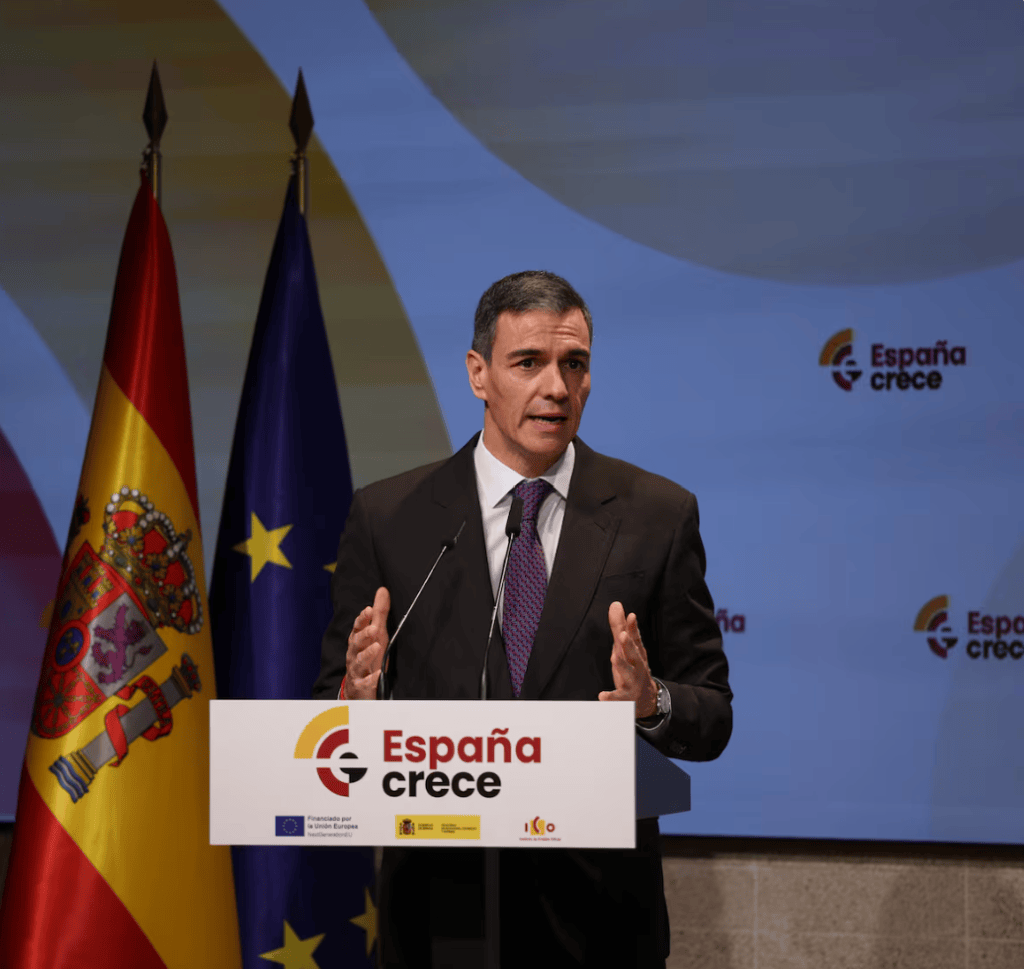
The particularities of «España Crece»
Some characteristics of “España Crece” (from what is known so far) are, in a certain way, particular.
Starting with the typology, following the classification established in Sovereign Wealth Funds: Between the State and Markets, traditionally, Sovereign funds have been established by countries with abundant natural resources or with surpluses in their public accounts. As an example of the first group, Norway can be mentioned, a country that has the largest sovereign wealth fund in the world. For its part, Australia's Future Fund is an example of a sovereign fund that has been established and financed through surpluses in public accounts.
In the case of “España Crece”, European funds are the origin of the 10.5 billion euros with which it is intended to initially endow the sovereign fund. This circumstance represents a peculiarity for a sovereign fund, although a certain parallel can be found with the channeling of resources from International Organizations in countries of the Global South to trusts. This practice has recently been discouraged by the International Monetary Fund.
Likewise, the origin of the capital is a good indication to know the objectives pursued by a sovereign fund. Thus, sovereign funds have been the majority stabilization or reserve funds. The main purpose of stabilization funds is to alleviate volatilities associated with fluctuations in the price of raw materials, among others. Among the stabilization funds we can mention the Economic and Social Stabilization Fund of Chile. For their part, reserve funds, such as Norway's sovereign fund, seek to cover long-term needs, with pension payments being a common example. Additionally, lately strategic funds have gained weight (like Temasek), those seeking to make strategic investments for the economy or even national security. Due to the announced investment objectives, “España Crece” would be a strategic fund.
Finally, the name chosen, “España Crece”, moves away from the usual nomenclature to name a sovereign fund. Internationally, Sovereign funds tend to adopt more technical and institutional names, like Investment Authority or Wealth Fund, among others. “España Crece” is a name loaded with political connotations.
«España Crece», the sixth Spanish sovereign fund
Sovereign funds are not an unknown vehicle for our country. Spain already has four sovereign vehicles related to Cofides, with a value of assets under management close to 6 billion euros. The most important of these funds is Cofides itself, current member and Spanish representative in International Forum of Sovereign Wealth Funds, the most important international sovereign fund association.
In addition, three sovereign vehicles must be mentioned within the perimeter of Cofides: Spain Oman Private Equity Fund (SOPEF I and SOPEF II), the “Social Impact Fund” (FIS) with an endowment of 400 million euros, and the “Co-investment Fund” (FOCO).
According to 2023 and 2024 annual reports of the research center on sovereign funds of the Instituto de Empresa, SOPEF I and II (with assets of approximately 300 million euros) are the result of a Joint Venture between Cofides and the sovereign fund of Oman to acquire minority stakes in Spanish companies in order to promote their internationalization. For its part, FOCO is a larger vehicle, having 2 billion euros of assets under management. This is a vehicle whose objective is to attract foreign capital and carry out co-investments in strategic sectors of the Spanish economy. In this case, FOCO's financing also comes from the European Next Generation funds.
Finally, the State Society of Industrial Participations (SEPI) can be classified as a strategic sovereign fund. Their high level of activity stands out, as their recent entries into the capital of important Spanish companies (Telefónica or Talgo, for example) demonstrate. The activity of SEPI shares great similarities with that carried out by the Italian or Turkish sovereign fund, among others. Thus, “España Crece” would be the sixth Spanish sovereign fund.
Suitability, risks and opportunities
The end of European funds and the absence of budgets constitute a challenge for the Spanish economy. The possibility of investing the remaining European funds and stimulating the economy beyond the summer of 2026 represents a certain boost of oxygen for an economy that has especially benefited from the injection of European aid. However, the debate on the convenience of creating a new sovereign fund should focus on whether the objectives set by the Government can be achieved through FOCO or SEPI, taking into account the similarities between these vehicles and the announced fund. Likewise, it is important to evaluate the potential risks associated with this initiative.
Regarding risks, highlights the potential politicization of the fund and its possible effects on investment decision making. The so-called "Principles of Santiago" (24 in total) constitute the guidelines and practices that sovereign funds are recommended to follow for their proper functioning and achievement of objectives. In this case, principle number 9, relating to the independence of the management team in making management and investment decisions, seems especially relevant.
Despite the risks and the apparent lack of need to create a sixth sovereign fund, the public debate generated by the announcement of the establishment of “España Crece” may represent an opportunity to improve integration and coordination between the different sovereign funds that Spain has. This circumstance would facilitate the definition of the objectives that must be pursued by the Spanish sovereign vehicles and would improve the efficiency in their achievement.
***
Romain Le Coz González
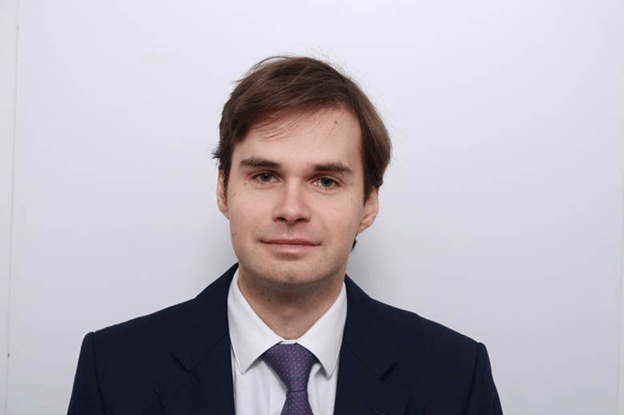
About the author: Romain Le Coz is a research fellow at IE Sovereign Wealth Research Center of the Instituto de Empresa. Romain is completing the Double MPA from Columbia University SIPA and the London School of Economics, specializing in finance, economics and international relations. Prior to his postgraduate studies, Romain worked at PwC in the Deals department, advising companies and investment funds on the purchase and sale of companies and real estate assets. In addition, he is a graduate of the Double Degree in Law and Business Administration from the Instituto de Empresa, and speaks six languages.