

Why the European Conference at Harvard matters
Four reasons why you should cross the Atlantic to talk about Europe
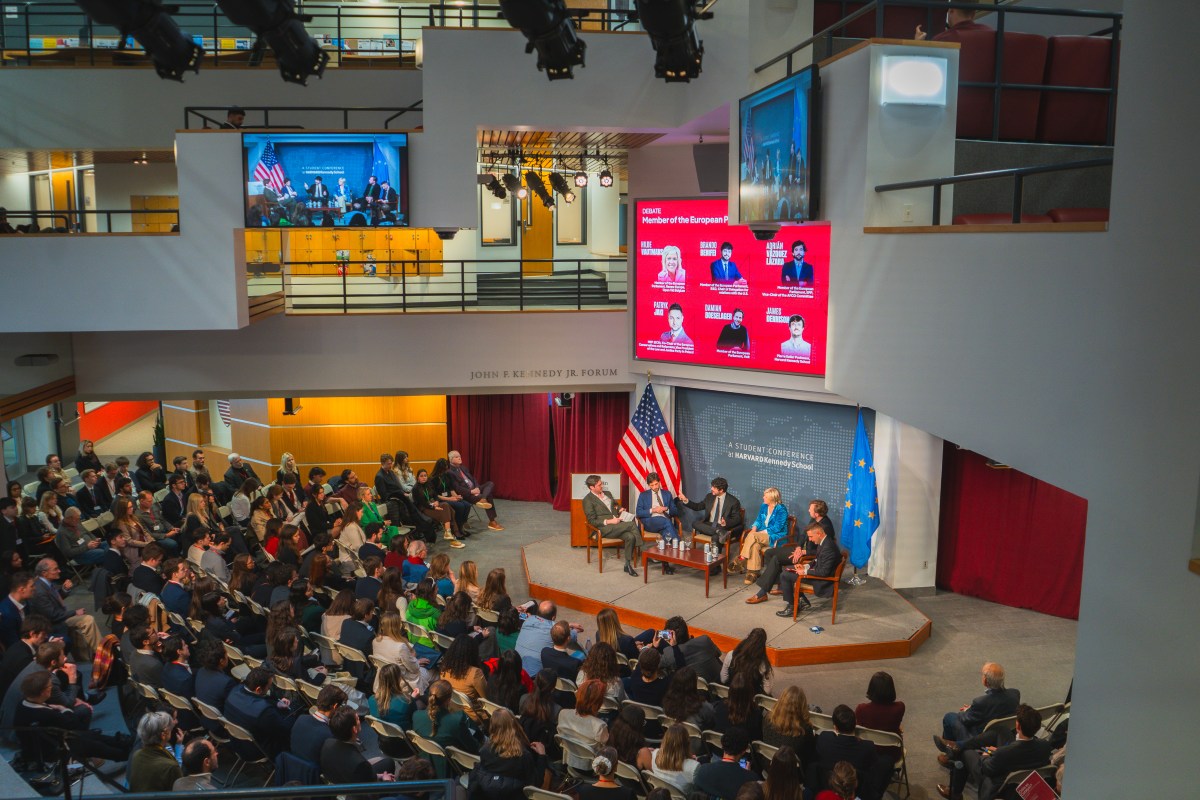
Last weekend I attended European Conference at Harvard, one of the most important non-governmental forums in the United States on Europe. Organized by students of the university, it brings together politicians, academics, professionals and students from both sides of the Atlantic to debate the present and future of Europe. In the panel of MEPs, Belgian MEP Hilde Vautmans (Renew Europe) opened the debate by pointing out the curious fact that five MEPs had traveled from Brussels to Boston to debate the same issues that they face every day in the European capital.
Yes it is curious. However, having worked for three years as a parliamentary assistant at the European Parliament in Brussels, I can say that I have never attended a debate between MEPs as stimulating as the one I witnessed in Boston a few days ago. In this blog post, I explain four reasons why I think it makes sense to cross the Atlantic to talk about Europe.
First: arguments longer than a tweet
Represented in the debate between MEPs were the European People's Party (EPP) – by the way, by the Spanish Adrian Vazquez –, the Progressive Alliance of Socialists and Democrats (S&D), the Group of European Conservatives and Reformists (ECR), Renew Europe and The Greens. It was an honest debate, without filters, but also without insults. For those of you who are not familiar, the “debates” (let's highlight the quotes) in the plenary session of the European Parliament are much more prepared and rehearsed. MEPs recite their interventions in an orderly manner from the lectern, and there is rarely any exchange or reply to other members. The main incentive is to get a good cut for social networks.
In this case, I don't know if it was the absence of cameras, the Chatham House rules (which require anonymity about who said what), the academic aura of Harvard, or the simple fact that no MEP had a critical mass of voters in the room to convince. The fact is that they said what they thought, without clichés or messages recited by heart. They developed extensive arguments that would not have fit in a tweet. They agreed when they agreed, and argued rigorously when they disagreed; some with more skill than others. A breath of fresh air.
Second: Europe and the United States spoke to each other
My favorite panel to illustrate this point was the one titled Recommitting to the Alliance: Does Transatlanticism Still Serve U.S. and European Interests in a Fragmented World? The panel brought together two figures from the Republican Party: Carla Sands, ambassador to Denmark during the first Trump administration, and Daniel Fried, former Undersecretary of State for Europe under George W. Bush; in front of two European voices: Ditmir Bushati, former Minister of Foreign Affairs of Albania, and the socialist MEP Brando Benifei.
As expected, Greenland became the main topic of debate.
One of the American speakers opened the debate bluntly: Greenland for Denmark is like an abandoned second home, falling apart and which it cannot afford to repair or maintain. What you have to do is sell it. In the audience our breath was taken away.
As far-fetched as it may sound, the speaker who defended him presented a strategic concern that even Europeans recognized as legitimate: the increase in Russian military activity in the Arctic and the threat it poses to trade routes between two strategic allies such as the US and Europe, as well as to the natural resources of the region. Even more interesting was hearing the discrepancies between both Republican representatives. One of them responded with visible revulsion to the abandoned house analogy, arguing that, while it is important to strengthen the security of Greenland, demanding that its sovereignty pass into American hands is neither necessary nor acceptable. He then reminded the Europeans in the room that we have friends and allies in the US Congress, in the Republican Party, and also in the current administration: find them and work with them.
To break the tension, the moderator asked the speakers with a nervous smile: “Do you think this conversation is more like a post-divorce disagreement between two people who once loved each other, or an intra-marital discussion?” The response was almost in unison: “An intra-marital argument.”
Third: forge future alliances
The third reason to attend the European Conference is that future alliances are beginning to be forged there. Among the varied audience were young professionals who aspire to work for future governments, multilateral organizations, philanthropic organizations and academic institutions on both sides of the Atlantic.
Thanks to this meeting, the American students who attended today understand the European perspective and the priority agenda a little better. And we Europeans understand that the transatlantic alliance has deeper pillars in the United States than the current administration. The exchanges continued beyond the panels: in the hallways, in the corner bar at the end of the day, and at the closing gala.
Tomorrow, those students will be counterparts on both sides of the ocean. They will remember this weekend together, they will have their WhatsApp numbers, and they will talk to each other.
Fourth: the level of the panelists was exceptional
It is striking that so many personalities from the political, academic and business spheres make room in their agendas to attend a conference organized by students. There were, for example, the Prime Minister of Luxembourg, Luc Frieden, and the recent Vice Chancellor and Minister of Economy and Climate in Germany, Robert Habeck. Spain was well represented – in addition to the aforementioned MEP Adrián Vázquez. Tamara Rojo, dancer and director of the San Francisco Ballet, participated in the panel Culture as Transatlantic Bridge, where she argued that culture and art are a very powerful form of diplomacy. This was, by the way, the most emotional panel of the conference. Ukrainian DJ and activist Daria Kolomiec told how she went from playing music at parties to collecting the soundscape of a war: the sounds of loss, the voices of fellow artists who have perished in the conflict. We get excited.
Also as a panelist was the Spaniard Anton Leis, current director of the Spanish Agency for International Development Cooperation (AECID), who explained the role that the agency is assuming in a global context that is increasingly hostile towards international cooperation. This panel was moderated by Samantha Power, who was director of the United States National Security Council and ambassador to the UN under President Barack Obama.
Europe includes Spain
This year, the Spanish presence has been especially prominent. Not only did we have three exceptional speakers, but Spanish students and professionals also attended from various cities in the US. They represented a diversity of sectors and perspectives. I want to thank the Spanish Public Policy Network(SPPN) team, who facilitated this mobilization, and the Royal Complutense College at Harvard(RCCHU), who hosted speakers and participants for an exclusive breakfast on Friday, February 6, at the start of the conference.
My last thanks go to the two Spaniards who were part of the great team organizing this conference: Aldara Falco and Antonio Tintoré. With your reflections I close this publication:
"From the European Conference I take away a realization: we were not, but continue to be, allies. And at this point in history, transatlantic dialogue is not only possible, but necessary. Spaces like this facilitate a channel of communication that is sometimes more effective than the formal channels between governments. American and European societies will survive the administration that we have had to live through today. It is for those societies, for us, that we must continue working on the transatlantic alliance."(Aldara Falcó)
"The energy that was breathed in the halls of the Harvard Kennedy School is precisely what must be channeled for Europe to fully awaken. If we are able to translate this impulse into political action, Europe can once again become an alternative with truly global appeal. And, in the transatlantic context, a stronger and more self-aware Europe could give rise to a more balanced, more mature and healthier relationship with the United States."(Antonio Tintoré)
See you next year, at the Europe Conference.
***
Victoria Suarez
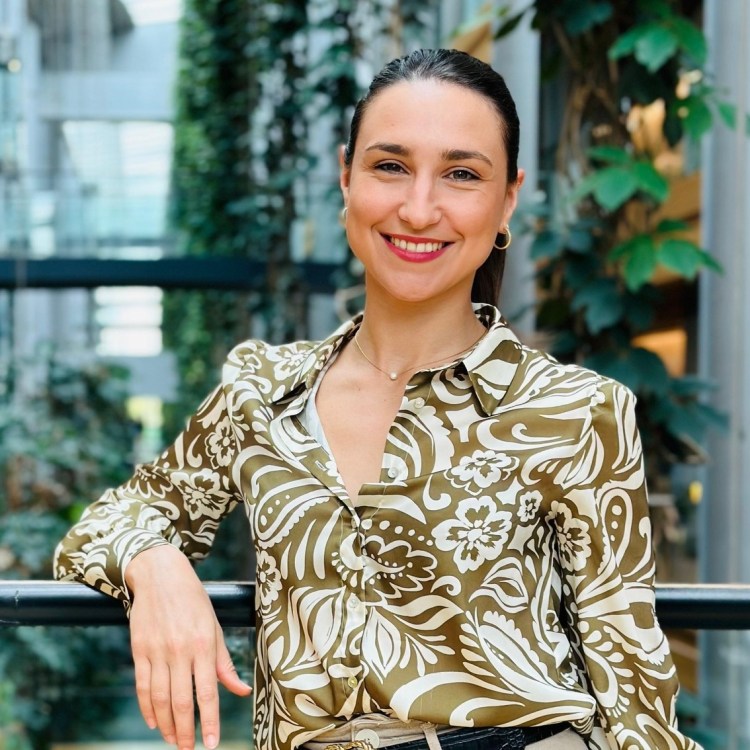
About the author:Victoria Suárez is a Research Fellow at the Growth Lab at Harvard University, where she works on the economic development of cities. Previously she was Eva Poptcheva's chief of staff in the European Parliament and parliamentary assistant to Luis Garicano, specializing in economic and budgetary policy. He also worked in the World Bank's Governance Global Practice, focused on governance and corruption issues. She graduated in Law and Business Administration from the Complutense University of Madrid and has an MPA in Economic Policy from the London School of Economics.