

European technological sovereignty in times of transatlantic friction
Technological sovereignty as a community priority
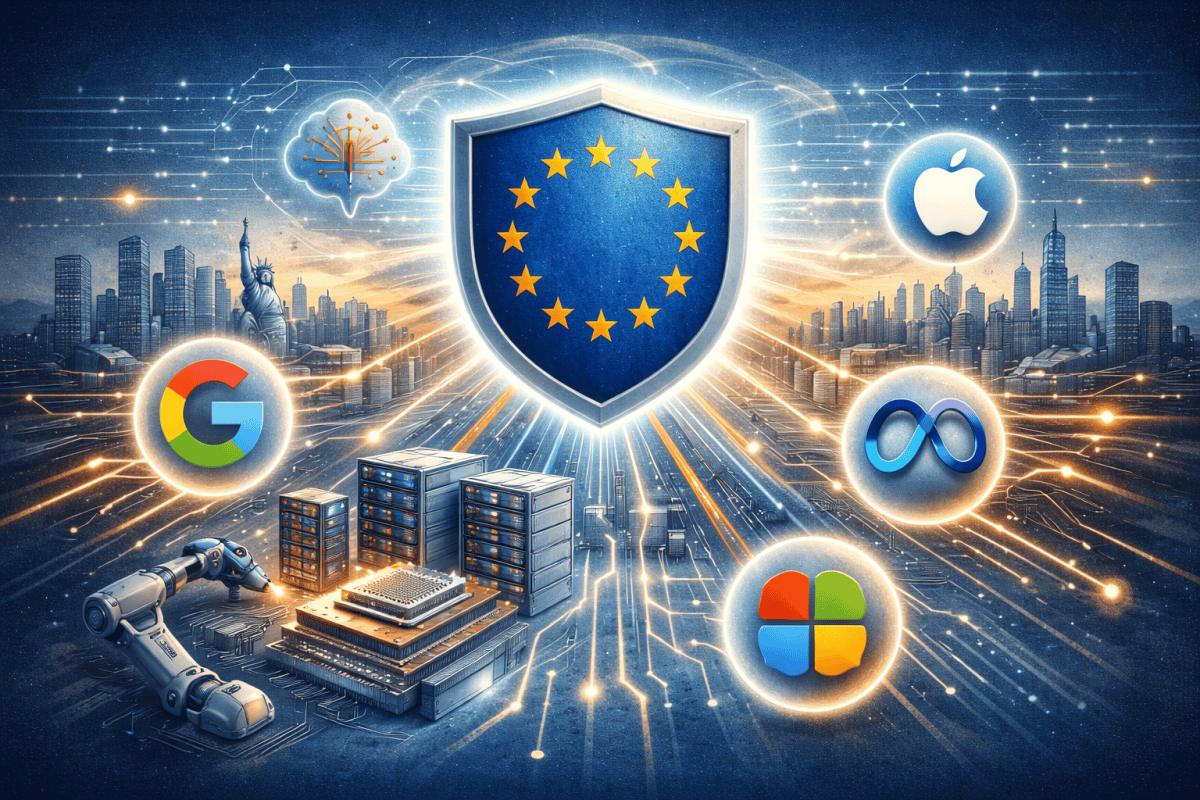
The concept of European technological sovereignty refers to the European Union's ambition to maintain control and autonomy over its digital infrastructure, data and critical technologies, while reducing excessive dependence on external providers. In an interview with Radio France Internationale, Emmanuel Macron highlighted the importance of this issue for Europe: “the battle we are fighting is one of sovereignty… If we do not build our own champions in all areas (digital, artificial intelligence), our decisions will be dictated by others.”
The European Commission has acquired new Commissioner for Technological Sovereignty and consolidated various initiatives and legislative pillars, reflecting their centrality in the community agenda. In November, France and Germany led the first summit on technological sovereignty, underlining its relevance for the future of Europe. In this context, European technological sovereignty has ceased to be an abstract political ideal and has become a priority strategic objective, which the European Commission intends to address explicitly during its new mandate. In this article, we will analyze the limitations and opportunities presented to the European Union in this task.
Structural dependence of the EU on the United States
However, the European Union (EU) remains highly dependent on external trading partners throughout its technological value chain, especially on the other side of the Atlantic. This dependence ranges from raw materials and advanced chips to cloud infrastructure and software applications. This situation of limited leadership increases the bloc's exposure to dynamics of economic coercion, growing cybersecurity risks, and regulatory frictions derived from coexistence (and competition) between the digital governance models of the United States and China.
About 70% of the European cloud services market is controlled by Amazon Web Services (AWS), Microsoft Azure, and Google Cloud. Regarding digital services, only 4 of the 50 main platforms most used globally are European, like Spotify. On the other hand, the majority belongs to American giants like Alphabet (Google), Meta (Facebook/Instagram), Amazon, Apple and Microsoft. Regarding specific services such as web search, more than 90% of the European market is in the hands of Google, which shows the oligopolistic and even monopolistic tendency of the technology sector. The chips that allow these services follow the same trend. Only the Dutch company ASML has a sufficiently relevant role in the chip supply chain to influence key decisions.
The transatlantic relationship: confrontation versus complementarity
The return of Donald Trump to the White House has meant the explicit abandonment of the cooperative approach that, with all its limitations, had characterized the previous stage with Biden in digital matters. The disappearance of EU-US Trade and Technology Council (TTC), already widely criticized for its limited capacity to generate binding commitments, has suppressed one of the few institutionalized forums for structured dialogue on technology between both powers.
Although the TTC never managed to resolve substantive differences over competition, platform regulation, data transfer or industrial subsidies, It did function as a mechanism of political containment and stable communication between both powers.. This, together with the departure of the United States from multilateral institutions, has left a vacuum that has been occupied by a more confrontational logic. European digital regulation is perceived from Washington not as a legitimate regulatory difference, but as a direct threat to American economic and strategic interests.
The sanctions from the European Commission against the practices of Google and X for endangering the European principles of competition and digital governance, under the Digital Services Regulation (DSA) and the Digital Markets Regulation (DMA), have contributed significantly to this conflict. From Washington, these measures have been interpreted as offensive to American national security, provoking threats of economic retaliation by Trump and prohibiting former commissioner Thierry Breton from entering the United States. Faced with this, the European response has been diffuse and fragmented, caught between the defense of its regulatory framework and the fear of a transatlantic escalation, which shows the limitations of European technological sovereignty in the face of external coercion.
Technological sovereignty and economic security: two sides of the same coin
In this context, measures initially perceived as adverse, such as tariffs, could be reinterpreted as a springboard to a strategic reorientation. From the perspective of weaponized interdependence (Farrell and Newman), the debate should not only focus on reducing dependencies, but also on how the EU can strategically leverage its economic centrality for its own interests. The European single market (which represents almost 15% of global GDP) can serve as a lever of power to influence rules, standards, and global market access.
At its latest Annual Meetings, the IMF presented a moderately favorable assessment of the macroeconomic performance of several European economies, but also highlighted one significant persistence of structural bottlenecks in productivity, investment and competitiveness. This diagnosis suggests that a well-designed strategy could act as a supply and investment catalyst. However, such a strategy requires due attention to the demand, which would encourage the development and scaling of European digital providers.
Instead of trying to integrate the entire technological supply chain on European soil, it is advisable to identify the chokepointscritical ones and the “gaps” where Europe can exert decisive influence on economic security and technological capacity. Competitive pan-European projects such as the development of artificial intelligence (AI) gigafactories or decisions like that of Denmark, replacing the base software with European alternatives in the government, can serve as an example to follow. Likewise, it would be advisable to foster commercial relationships where dependence on American suppliers does not pose a critical risk, such as commercial customer relationship management (CRM) systems, private collaboration suites or non-strategic software as a service (SaaS) platforms.
Looking ahead, the EU should prioritize a strategic and realistic approach. Sovereignty is not synonymous with autarky. This approach involves taking advantage of the weight of the single market to generate capabilities that not only reduce vulnerabilities, but also position the EU as an essential player in the global value chain, without necessarily disengaging from the US market in its entirety.
***
Pau Alvarez-Aragones

About the author: Pau Alvarez-Aragones is currently a Plurall expert, working in politics and technology. Previously, Pau has been a consultant to the World Bank on projects focused on the EU. Pau graduated from the Joint Master's Degree in Transatlantic Affairs between the College of Europe and the Fletcher School at Tufts University.
Disclaimer: This article only represents the opinions of the author and at no time does he represent the institution for which he works.