

Greenland: The Arctic Dilemma
The Arctic as the new epicenter of transatlantic discord
This week, Arancha González Laya, Minister of Foreign Affairs, European Union and Cooperation of Spain after Josep Borrell, explained at Georgetown University the critical lack of understanding between the two main Western powers, the European Union and the United States (USA). In conversation I pointed out that this is not a commercial problem or a political discrepancy to be resolved, as has been done between existential allies since the Second World War. It reminds me, rather, of a couple like Marriage Story, who no longer seems to understand each other at all, who speaks parallel languages, with apparently irreconcilable worldviews, where conflicting interests are nothing more than the icing on the cake.
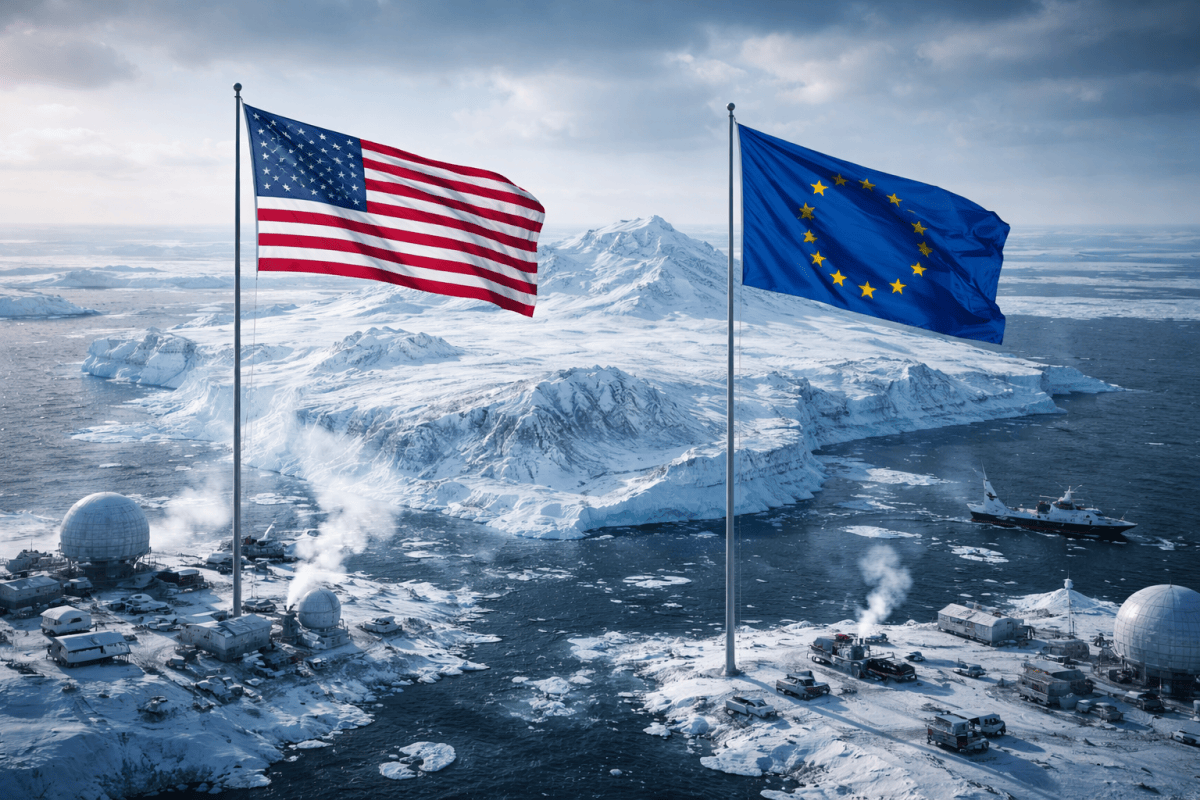
We have entered 2026 with the latest manifestation of this disagreement, and the stability of the Arctic has been transformed overnight into a crisis of sovereignty. What in the past was considered a rhetorical issue - the acquisition of Greenland by the United States - has been consolidated under the administration of President Donald Trump as a strategic pillar of his foreign policy. After the recent operational success that led to the capture of Nicolás Maduro in Venezuela, the White House has turned its gaze northward, posing an ultimatum that has put NATO's security architecture and the cohesion of the European Union in check.
Greenland is not just a territorial dispute, but the symptom of a paradigm shift in the global order - where security and defense, critical resources and trade routes dictate the agenda of the great powers, which consider their hegemony for the coming decades. The current the state in which in the Arctic appears unsustainable: The United States argues an existential need for national security, driven by the growing presence of Russian and Chinese icebreakers and intelligence assets in the region, not to mention the impact on melting ice due to climate change. For Washington, the perception that Denmark is unable to militarily secure a territory of two million square kilometers - equivalent to Spain, France, Germany, Italy and the United Kingdom combined - implies a vulnerability that they cannot assume nor, therefore, tolerate.
Under the influence of even more determined figures like Stephen Miller, the White House has moved from suggestion to direct pressure. The logic is simple but disruptive: if the United States does not take control, its adversaries will. This position does not address the complexities of Danish sovereignty or the right to self-determination of the island's 56,000 inhabitants, who - according to verian study - refuse to go from being an autonomous entity under the Danish crown to becoming, in some way, an American territory. In this context, two main scenarios are emerging that will define the future of the island and, by extension, of the Atlantic Alliance.
Scenario 1: The “Atlantic Compromise” or the diplomatic solution
European diplomacy, led by Copenhagen and with the cautious support of London and Berlin, would be seeking to avoid a total rupture through a compromise scenario. The Danish proposal can offer the American president a "political and legal victory" without giving up the sovereignty of the island.
This agreement would be based on clarifying and expanding the Agreement between the Government of the United States of America and the Government of the Kingdom of Denmark, in accordance with the North Atlantic Treaty, relating to the defense of Greenland of 1951, and by which the United States has military access in fact to Greenland - with the base of Pituffik (formerly Thule) -, but Denmark maintains authority de jure over new facilities. The compromise would involve granting Washington full military access and a veto right over the presence of third powers, such as Russia and China.
For this scenario to be viable, the North Atlantic Treaty Organization (NATO) must play a leading role. Keir Starmer's government has sought to position itself as a bridge between Brussels and Washington, considering the deployment of British and Allied troops on the island to alleviate security concerns. The NATO Summit scheduled for July 7 and 8 in Turkey would emerge as the natural moment to seal this pact, which would allow the United States to claim strategic control of the Arctic under a multilateral umbrella and complying with the spirit of the 1951 Treaty. It is worth remembering that Greenland is not part of the Alliance as a State, but only as part of the Kingdom of Denmark.
Scenario 2: Escalation and the Anti-Coercion Instrument (ACI)
The second scenario contemplates a unilateral escalation by the United States that would involve forcing a change in legal status for Greenland. It could be Palaos style, under “Free Association” to the United States since 1982, obtaining independence since 1994, which grants it a kind of “sovereignty under tutelage” with financial support of 889 million dollars programmed in assistance between 2023 and 2043.
It could also be an “Unincorporated Territory” to Puerto Rican style, administratively a Commonwealth since 1952. This gives financial support - about $19 billion in federal funds and other aid in 2026 - for a population that does not pay federal taxes, nor has a voice in the Capitol, nor a vote in presidential elections. And either style could be achieved through political and economic pressure.
The European response to this threat has revealed internal fractures. According to Eurointelligence, Poland and the Baltic countries are skeptical of an actual annexation, confident that the US Congress could block such a measure after the elections at the end of the year - mid-terms, on November 3 -, where could change the majority in the House of Representatives. On the other hand, France has adopted a maximum alert posture, does not rule out a military intervention or an administrative occupation, and has proposed the activation of Anti-Coercion Instrument (ACI).
The ACI is a "trade bomb" of the European Union, designed to respond to foreign economic blackmail, initially designed against China. Its activation would allow 100% tariffs to be imposed on key US exports, restrict access to public markets and limit the operation of US technology companies in the Single Market. However, this mechanism is a double-edged sword: a trade war of this magnitude would seriously damage European economies and could be the definitive catalyst that justifies the departure of the United States from NATO, thus fulfilling the objective of some extremism in the US administration.
However, for most member states, it appears that Greenland is not a core EU interest that justifies a confrontation with Washington. The basic position is one of non-escalation: the European Commission reacts to legislation and concrete facts, not to rhetoric or messages on social networks. As European Commission spokesperson Eric Mamer says, “We do not comment on comments».
The military scenario seems very unlikely, but the damage to trust has already created a strategic vulnerability: the lack of contingency plans in the event of a non-consensual landing scenario.
Greenland has become the ultimate stress test for the transatlantic relationship in 2026. If agreement and unity between allies prevail, NATO could emerge stronger. On the contrary, if escalation and unilateral national decisions are chosen, it could lead to the fragmentation of the Western alliance and the confirmation of a reconfiguration of global geopolitics, with new control of the areas of influence of each superpower, including Ukraine and Taiwan. It would be like a new Yalta Conference, like in 1945, but with no Europeans among the Big Three.
***
Antonio Vargas
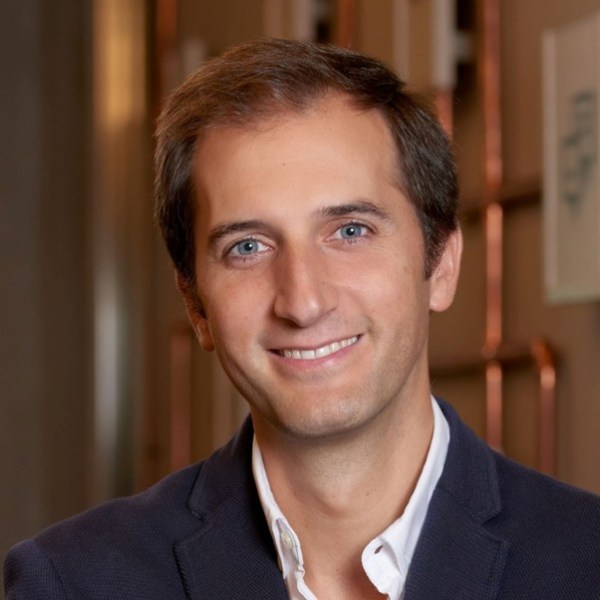
About the author: Antonio Vargas, with a degree in Law from the Complutense University of Madrid and in Business Administration from UFV, with training in Strategic Management and Corporate Communication, chairs the ALETI Cloud committee and is part of the FIDE Academic Council. Since 2025 he has been Principal of Global Trade and Economic Security at Amazon Web Services (AWS) and has been director of Institutional Relations at AWS, manager of Public Policies at Google and advisor in the Cabinet of the Presidency of the Government of Spain.